Michigan Spray Foam Insulation

Rim Joist Insulation Michigan — Highest ROI Upgrade for Michigan Homes

Certified Michigan contractors. Serving Detroit, Grand Rapids, and communities statewide. Same-week estimates, no obligation.

(517) 234-2744 Fully Insured Same-Week Estimates Statewide Coverage

The Rim Joist Is Where Most Michigan Homes Lose the Most Heat

The rim joist is the band of wood framing that sits on top of your home’s foundation wall. It runs the full perimeter of the house, and in the vast majority of Michigan homes built before 1990, it is either completely uninsulated or stuffed with fiberglass batts that have compressed and slumped over decades. That exposed perimeter is a direct thermal bridge between your heated living space and outdoor Michigan temperatures.

Spray foam applied to the rim joist is consistently the highest return-on-investment insulation upgrade available to Michigan homeowners. One application lasts the life of the building, needs no maintenance, and delivers measurable energy bill reduction in the first heating season.

Why Fiberglass at the Rim Joist Fails

Fiberglass works by trapping still air within its fibers. When it compresses against the wood framing of the rim joist, or when it sags and pulls away from the edges, it loses both its R-value and any air resistance it had. Most Michigan homes have original fiberglass at the rim joist from the 1960s or 1970s. After 40 to 60 years that material is compressed, moisture-damaged, and provides almost no thermal resistance.

Spray foam bonds mechanically to the wood framing and concrete foundation. It does not compress, sag, or separate from the surface over time. Closed-cell foam also acts as a vapor retarder, stopping moisture from moving from the foundation into the floor assembly.

Closed-Cell vs Open-Cell for Michigan Rim Joists

Closed-Cell Spray Foam (Recommended)

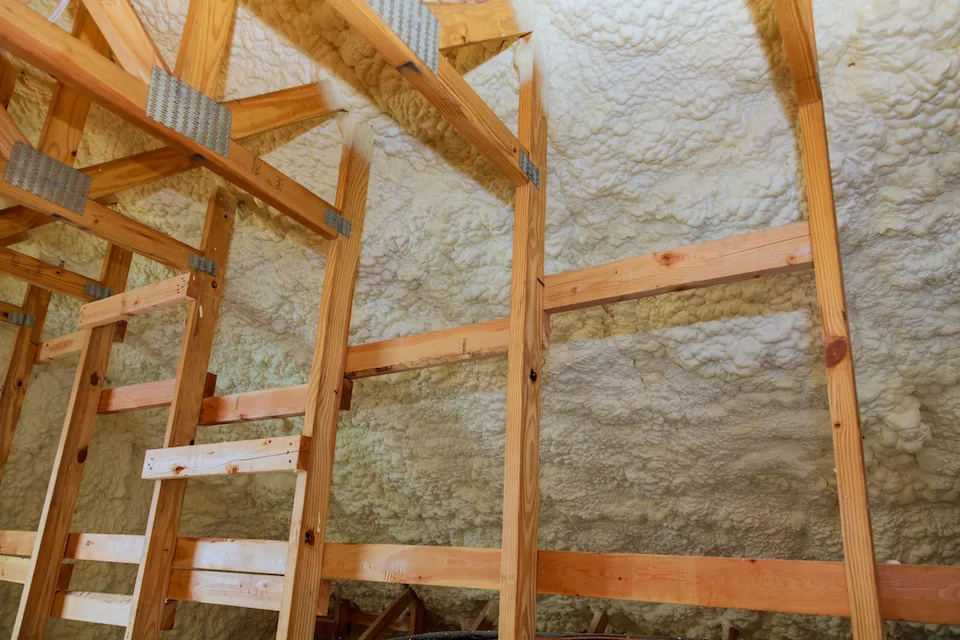
Closed-cell spray foam is the standard recommendation for Michigan rim joist applications. At 2 inches it achieves R-13 or better. It also provides vapor retarder function, structural rigidity, and adhesion to both wood and concrete with no gaps at transitions.

Open-Cell Spray Foam

Open-cell is appropriate at the rim joist when the basement is conditioned and vapor drive is managed by other means. It provides excellent air sealing but does not provide vapor control. In most Michigan basements with any moisture history, closed-cell is the correct choice.

What the Installation Looks Like

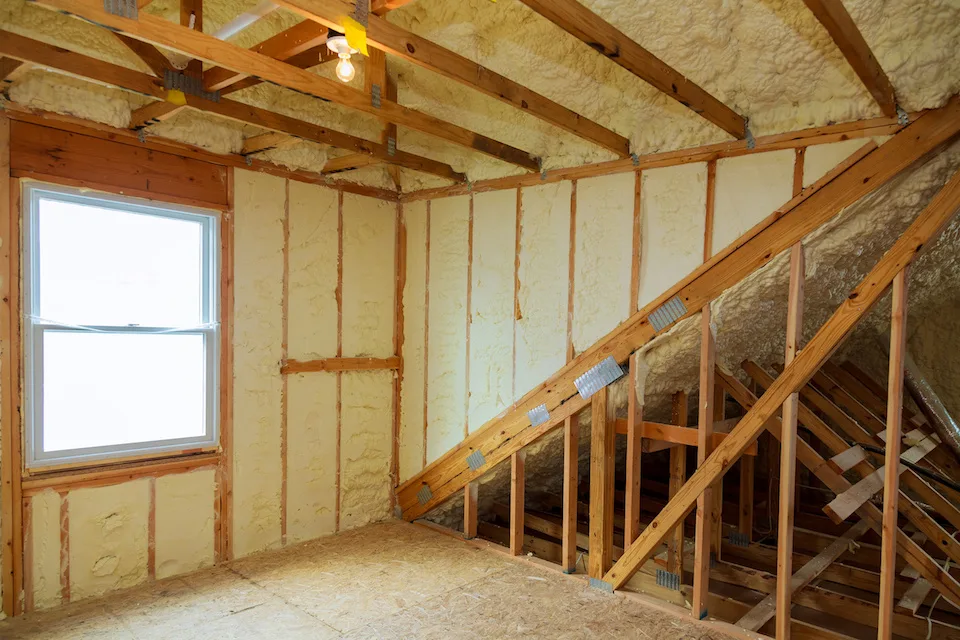
A rim joist job on a standard Michigan ranch or colonial takes four to six hours. Existing insulation is removed, the rim joist is cleaned and dried, and closed-cell foam is sprayed at 2 to 3 inches thickness across the full perimeter. The foam cures in 30 to 60 minutes. The space is usable same day.

Pricing for Rim Joist Insulation in Michigan

Rim joist insulation pricing in Michigan:

For a typical Michigan home with a 1,000 to 1,400 sq ft footprint, most rim joist jobs run $650 to $1,400 installed depending on access and existing insulation condition.

Most Michigan homeowners recover 20 to 30 percent of the installation cost in the first heating season through reduced DTE or Consumers Energy bills.

DTE Energy and Consumers Energy Rebates

Both DTE Energy and Consumers Energy offer rebate programs for qualifying insulation improvements, including air sealing and basement work. Rebate amounts change annually. We document work in a format that supports rebate applications.

Get a Free Rim Joist Estimate

Serving Detroit, Grand Rapids, Lansing, Kalamazoo, Flint, and communities across Michigan. Free on-site estimates, no commitment required. Call directly or fill out the form below.

Rim Joist ROI and Scope Details

  • The source says pre-1990 homes in Washtenaw County, Kent County, and along the I-96 corridor between Lansing and Detroit often have no rim-joist insulation at all.
  • Utility penetrations such as gas lines, electrical service, and dryer vents are called out as air pathways through the rim joist area.
  • Closed-cell foam at two inches is cited at R-12 to R-14, and at three inches R-18 to R-21, with air sealing active even at lower thickness.
  • A typical 1,400-2,000 square foot single-family home in Grand Rapids, Lansing, or Ann Arbor is estimated at about $800-$1,500 for full rim joist work; split levels in Oakland County and additions in Macomb County can push cost higher.
  • Active water intrusion at the rim joist, including older homes near the Red Cedar River corridor in East Lansing or low-lying neighborhoods in Flint, must be fixed before closed-cell foam traps moisture.

Basement Rim Joist Heat-Loss Path

  • The source describes the rim joist, also called the band joist, as the perimeter member at the top of the foundation where floor joists meet the exterior structure.
  • Detroit Metro, Dearborn, Livonia, East Hills, Heritage Hill, Corktown, and Grandmont Rosedale are named as older markets where rim-joist bays were left open, loosely filled, or ignored.
  • Fiberglass is described as filtering rather than blocking air, with staining, mold growth, and soft wood commonly found behind old batts pulled from Michigan rim joists.
  • Closed-cell spray foam is framed as the correct product because it expands around pipes, wiring, and irregular framing and cures into a moisture-resistant air-sealing layer.
  • The source ties cold basement air, cold floors above, and $300+ DTE/Consumers winter bills to this specific unsealed perimeter path.

Cities We Serve

Detroit Grand Rapids Ann Arbor Lansing Kalamazoo Flint Sterling Heights Troy Livonia Dearborn Royal Oak Muskegon Holland Midland

Frequently asked questions

How much does spray foam insulation cost in Michigan?

Spray foam insulation in Michigan typically costs $1.00–$1.60 per board foot for open-cell foam and $1.60–$2.60 per board foot for closed-cell foam. A typical attic runs $1,800–$4,500 for a typical 1,200 sq ft attic; rim joist projects average $1,200–$2,500. Final pricing depends on access, required thickness, and any removal of existing insulation.

What is the difference between open-cell and closed-cell spray foam for Michigan homes?

Closed-cell spray foam delivers approximately R-6 to R-7 per inch; open-cell approximately R-3.5 to R-4 per inch. Closed-cell is recommended for Michigan basements, crawl spaces, and rim joists because it provides a Class II vapor retarder — critical in cold, humid winters. Open-cell is preferred for many attic applications and costs less per board foot. Our service area sits in IECC Climate Zone 5A; northern Lower Michigan and the Upper Peninsula are Zones 6A and 7. Code requires R-49 minimum attic insulation under Michigan's residential energy code (IECC Zone 5A).

How long does spray foam insulation last in a Michigan home?

Spray foam is a permanent insulation with an expected lifespan of 80+ years without sagging or compressing when properly installed. Unlike fiberglass batts, it does not compress, sag, or absorb moisture. In Michigan's freeze-thaw climate, closed-cell foam also adds rigidity to walls and rim joists and prevents the moisture infiltration that shortens the life of other insulation types.

How much can spray foam insulation reduce energy bills in Michigan?

Homeowners typically see 20–40% lower heating and cooling costs after air sealing and insulation, depending on the home's starting condition. Most of Lower Michigan logs roughly 6,200 to 6,900 heating degree days per year. Spray foam's dual function as insulation and air barrier eliminates the convective heat loss that fiberglass batts alone cannot address.

Are rebates or tax credits available for spray foam insulation in Michigan?

DTE Energy and Consumers Energy offer rebates for qualifying insulation and air-sealing upgrades through their Home Energy Efficiency programs. Amounts vary by measure and change annually — confirm current amounts at dte.com or consumersenergy.com before your estimate. The federal 25C Energy Efficient Home Improvement Credit ended December 31, 2025. No federal tax credit currently applies to insulation work; utility rebates remain available.

Get a Free Spray Foam Estimate

Tell us about your project and our crew will get back to you with a written quote within one business day.

Call us directly: (517) 234-2744

Request a Free Estimate

Call Now Free Estimate